January 27, 2008

Elemental Zazen concert videos

With a punk´s energy and a poet´s focus, Elemental Zazen rocked a packed house last night at the Middle East downstairs.


Recorded from the vantage point of a side stage monitor, the videos feature Zazen´s rambunciotnus live band, with Gnotes on the guitar closest to the camara and Todd Thurheimer playing bass on the other side of Zazen. Onstage, but outside the frame, are KEH Drums bangin out beats and DJ Slipwax on the wheels of steel.


With rowdy crowd in the house, Zazen offered a live preview of his upcoming album The Glass Should Be Full, to be released by Gnawledge Records in May 2008.


The show also boasted live painting by Writous, a Boston graf artist who was recently featured in The Herald in an article written by Chris Faraone.


The post-game recap from concert promoter Leedz: ¨I usually dont post bulletins AFTER a show but this time i feel its necessary. Last Nights show, Meleodesiac CD release party, was insane. We didnt have one national act and did close to 400 people in the venue. Big up to all the acts, 3sp, Left Over Wine, Slipwax, Zazen and his band, Melodesiac, Ricky Mortis, Writous, and Elephant House. Each act played their role perfectly and last night was a perfect example of what can happen when every act hussles. But more importantly each set was tight and the fans were great. I was completely in shock on how well it went. For a night with all local acts, we proved again that we have our own scene here in Mass and dont always need big national acts to pack up a venue. I cant wait to work with all of these artists again and next time i guarrantee it will be even bigger.¨


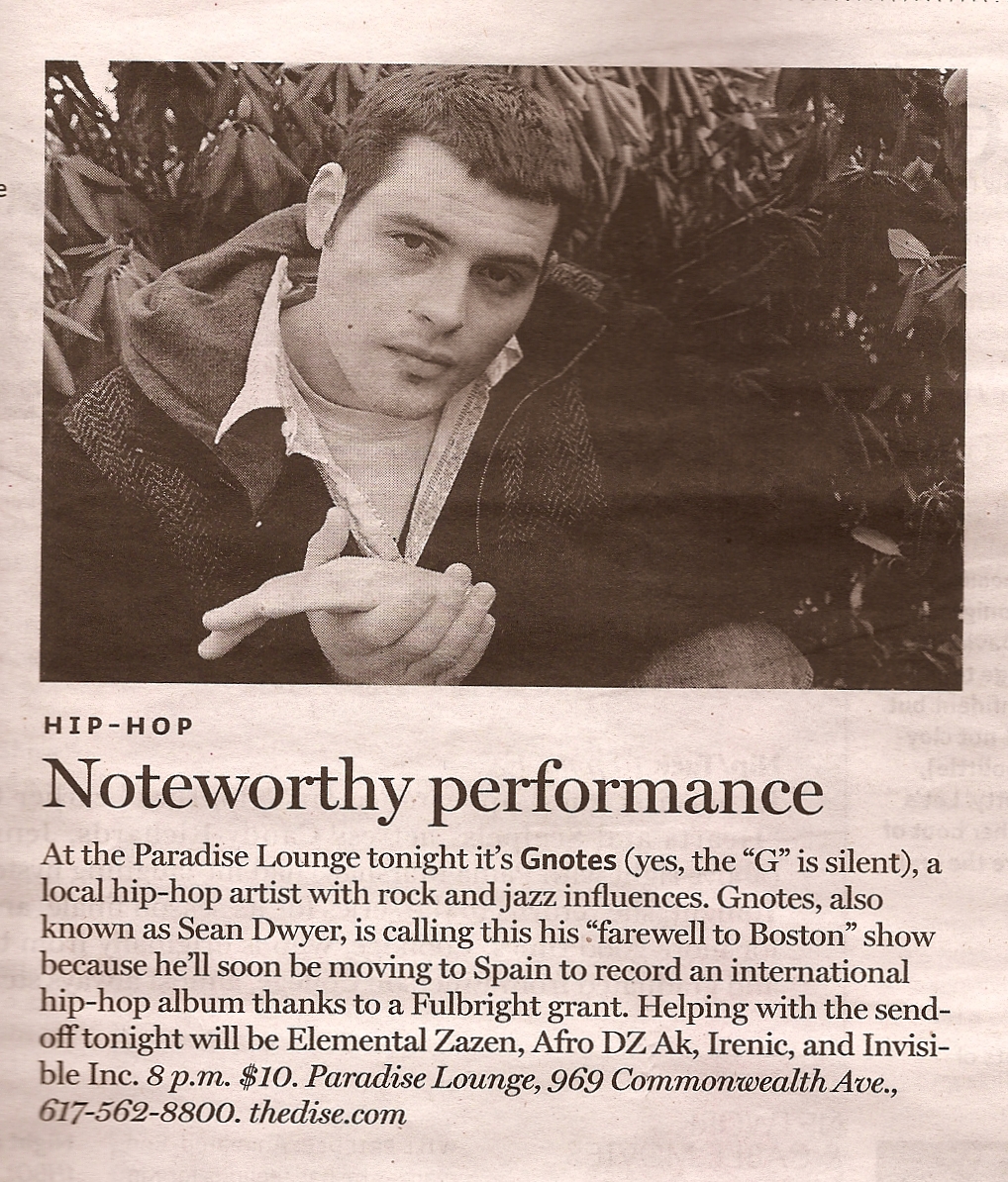
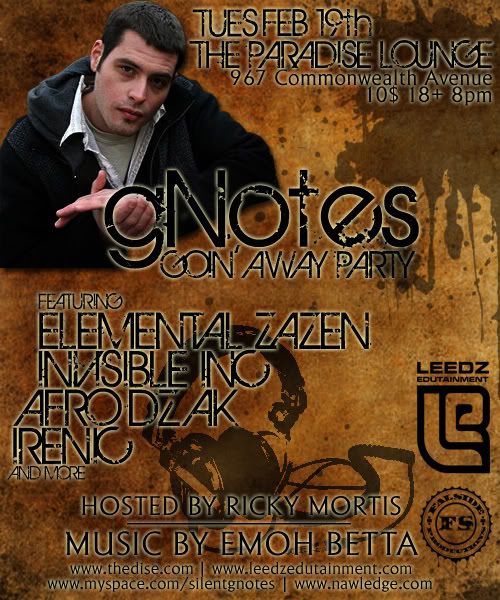
For more melancholy mayhem, catch Elemental Zazen performing live at the Paradise Lounge on February 19, 2008 at Gnotes´ final show in Boston before heading to Spain to collaborate on El Canyonazo´s arab/flamenco hip-hop record.

November 20, 2007

Luz Aire y La Calle

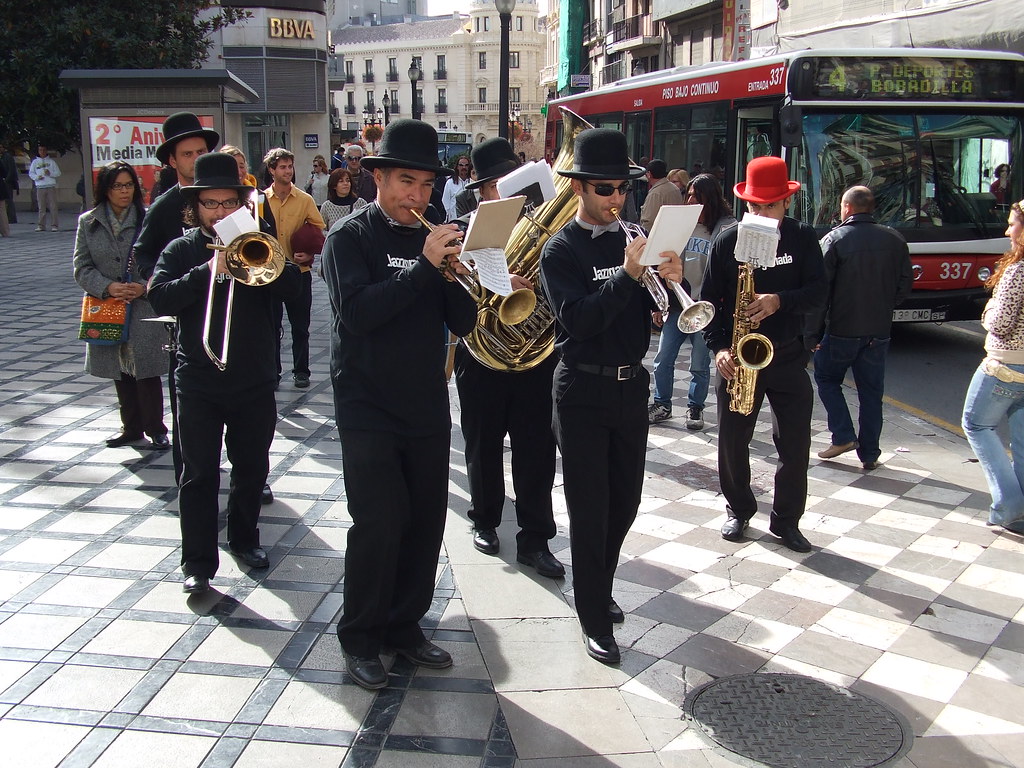
Granada Jazz Band
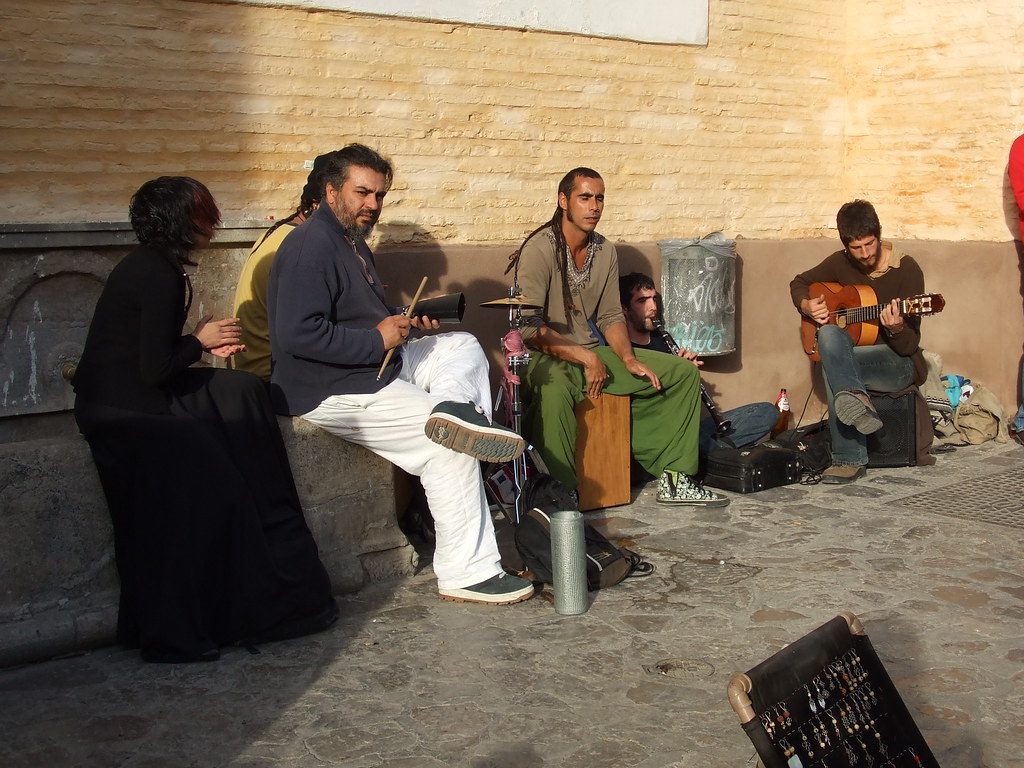
As part of the XXVIII Festival de Jazz, there's been live music in the streets of Granada every Saturday. The festival's organizers gave Gnawledge permission to record this week's performance, but while we set up in Plaza Nueva, the capricious ensemble rerouted themselves to Plaza Bib-Rambla instead.

Granada Jazz Band 2


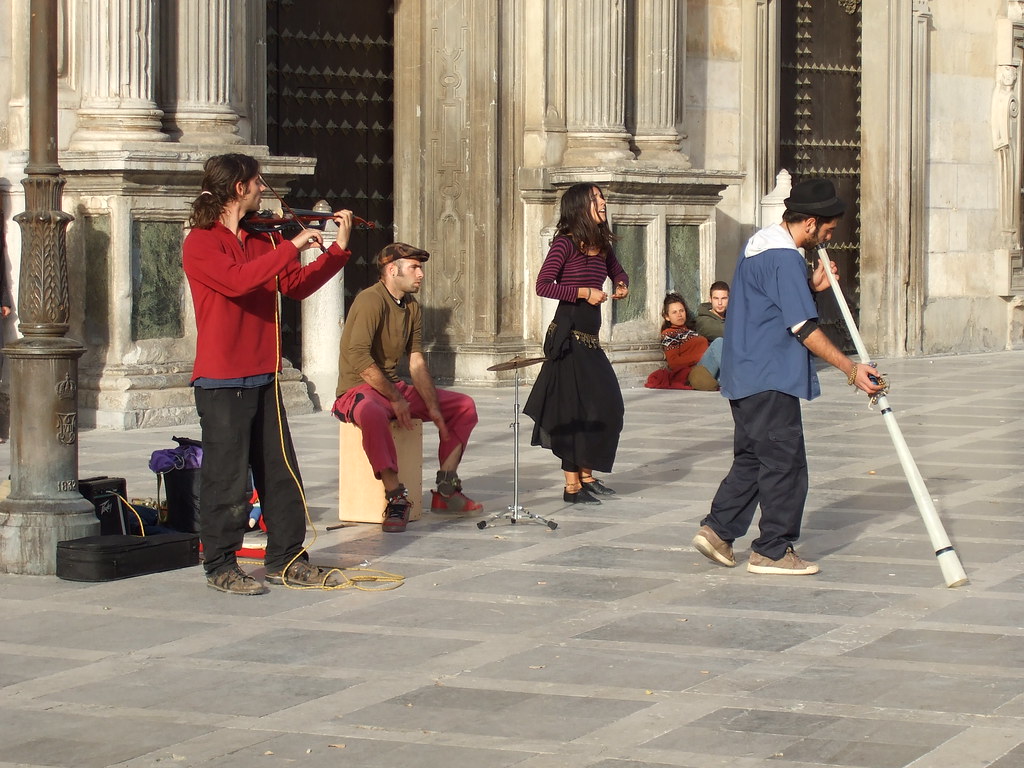
Disappointed about a missed opportunity, me and my pair of Rode NT2-A mics caught the attention of a trio of musicians (below) who asked us if we'd be interested in recording their performance.

Music in Plaza Nueva (Granada)

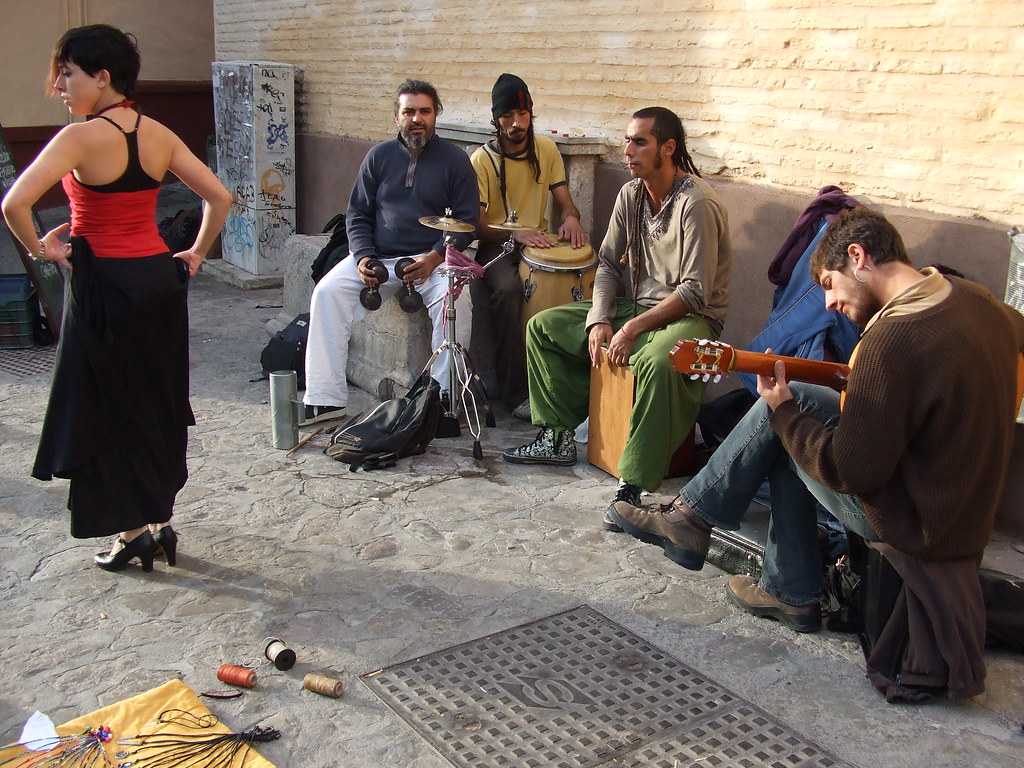
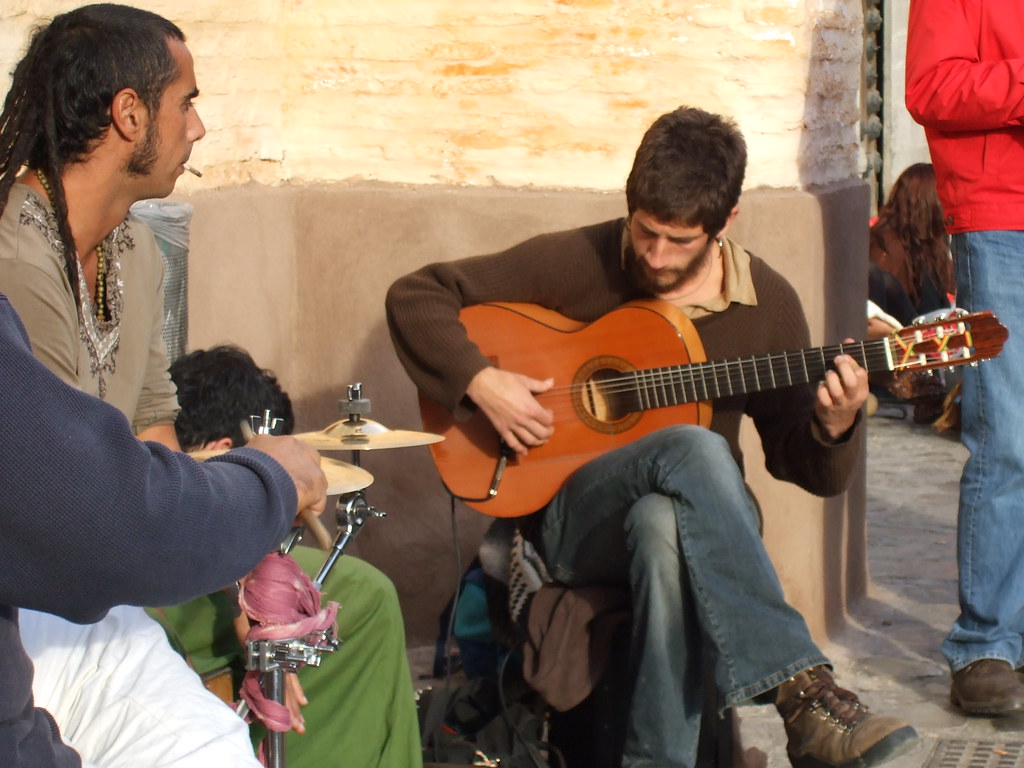
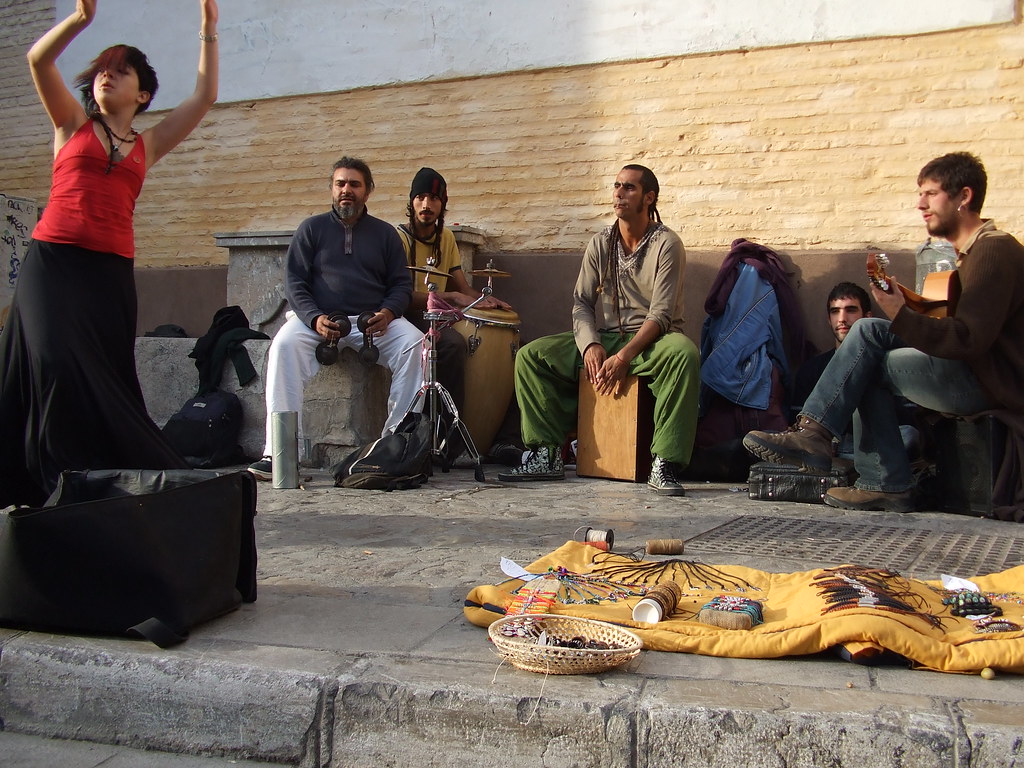
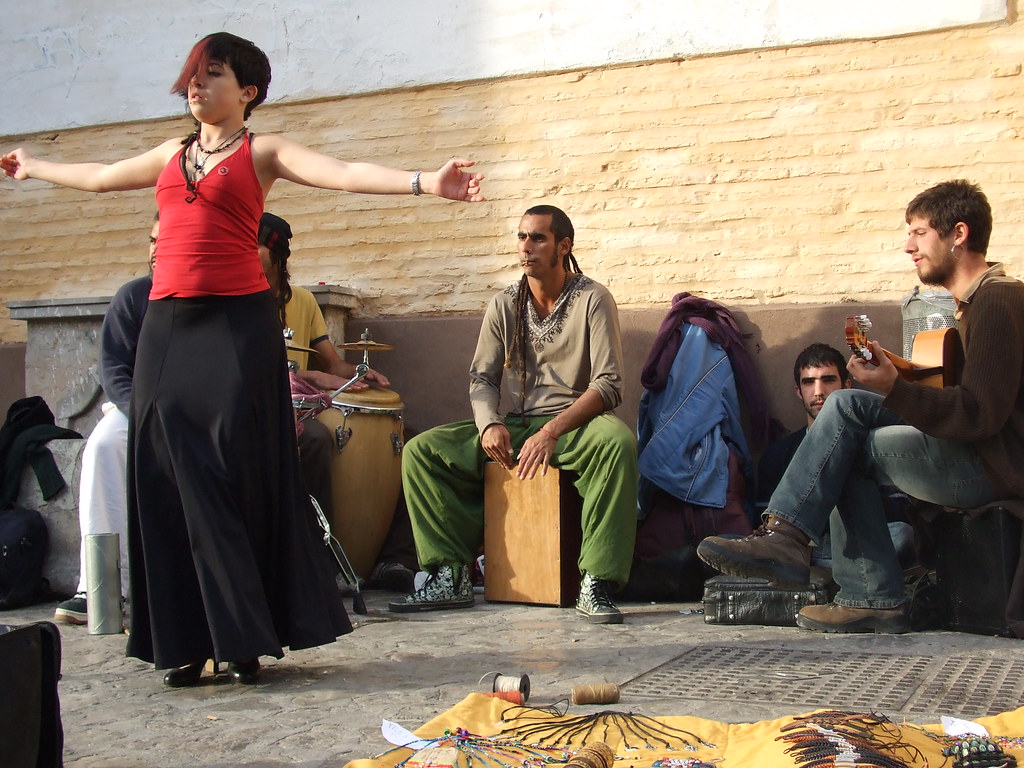
But Granada overprovides. Not 5 minutes later we met another group of musicians who were also performing in the street that afternoon. Stuck between a sofa and soft place, we decided to leave the didgeridoo and violin behind and record instead with Luzaire, who played a fusion of flamenco, arab, brasilian and afrocuban music.

The mp3s below were recorded live on the street on November 17, 2007.

Luzaire 3

Luzaire - "Guajirilla Ruborosa" (mp3)

Luzaire 2

Luzaire - "Mano Franca" (mp3)

The video has no sound, so play it with the audio clip below.


Luzaire - "Breve y Sincero" (mp3)

Luzaire 1

Luzaire - "Muy Triste El Mar" (mp3)


Luzaire 5

Luzaire - "Conventos Vacios" (mp3)

Again, the video has no sound, but check my brief appearance at the very end.


Luzaire - "La Palmera Airosa" (mp3)

Luzaire 5

Luzaire - "Mírame Madre" (mp3)


que bien rollo!: A sunny Saturday afternoon in the public domain, listening to borderfree music by the Rio Darro.

rightclik + download all 11 mp3s (zip = 53mb)
Also, check out Una Vuelta en Granada for more pictures.

October 8, 2007


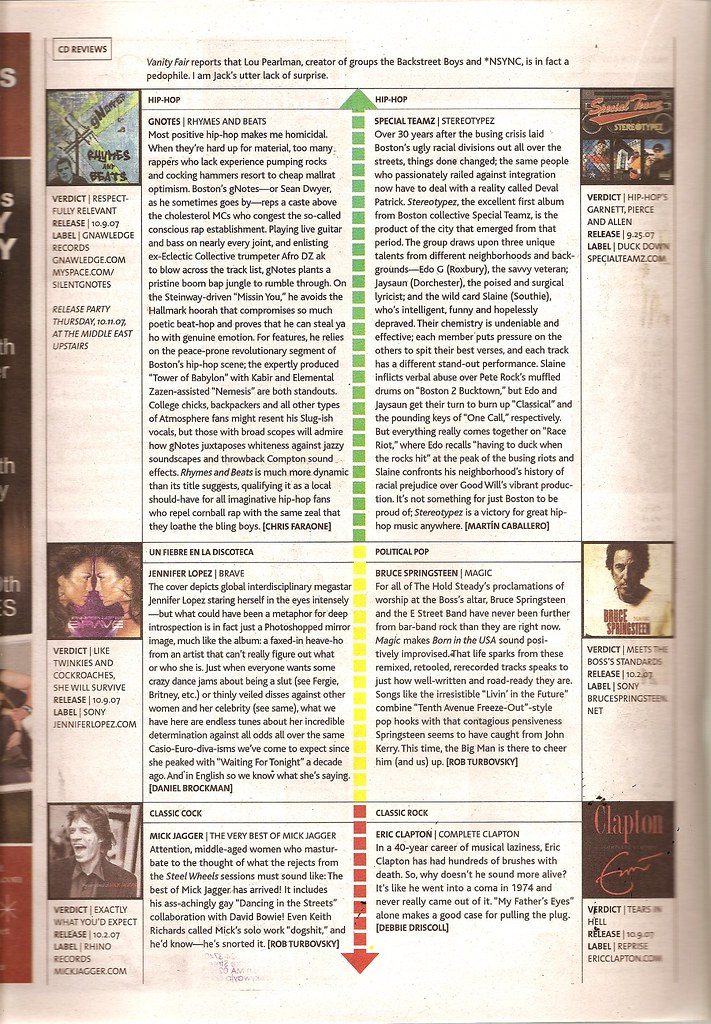
Gnotes - "Throw Your Nickels Up" from Rhymes and Beats.

Rhymes and Beats


Buy the album at Amazon, CDBaby or iTunes

Check Gnotes on MySpace for additional info.

March 15, 2007

Video of gNotes and Afro DZ ak freestyling at Tufts University, moving from the mic to the trumpet, from live drums and to organic rhymes


Check out more at Gnawledge.com

January 28, 2007

New videos from gNotes performing at the Radix record release show.


gnotes - "Punchlines" (John Mayer Remix)


gnotes - "No Man's An Island"


gnotes - "Pete the Banker"

January 5, 2007

Edutainment from Afro DZ ak, dropping gnawledge on the mic and through his trumpet.


"Action is what gives words traction
And true service to others is its own satisfaction" Afro DZ ak


"The youth need a little inspiration
Beyond the mass media infiltration" Afro DZ ak

Much repect to Speakerheart for producing these films.
Check Speakerheart.com for more.

January 1, 2007

Blog entries previous to this date were posted retroactively to the original publication date of the articles.

May 4, 2006


Ryan Wade: plays well with others
By Canyon Cody
Published in The Heights

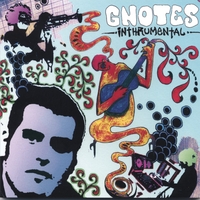
When Gnotes, aka Sean Dwyer finished the music for his new album Inthrumental, he asked Ryan Wade, BC '05, to design a cover that matched the album's unique sound of joyous instrumental hip-hop. "Before I even saw [Wade's] design, I knew I would love it. I sent him the album and just a few days later he sent it back with the music converted to paint," explained Gnotes.

Any artist with a major in studio arts can paint a pretty picture, but Wade has the unique ability to interpolate music and visually adapt the sound for the cover art. Since graduating he has designed the artwork for two albums and a DVD cover, and hopes to continue working with musicians and filmmakers in the future.

Like most young boys, Wade enjoyed drawing dinosaurs, trucks, and comic book superheroes, but didn't seriously consider art as a career until college. "Instead of watching TV in my dorm room, I'd just go mess around in the art studio," he said. He cites Art Nouveau, Rick Griffin, and Paul "Diddy" Hughes as his biggest art influences and currently works primarily in watercolor and graffiti stenciling.

Earlier this year, director Francisco Saco asked Wade to design the cover for his new skate film, Distant. Wade's colorful cover reflects the fluid, dynamic cinematography of the film, which features stunning shots of amateur skaters in different countries around the world.

"There's no better way to get to know a city or town, and all its local flavors, than on a skateboard. Just rolling down the streets and looking all around you. Seeing what there is all around you. It's the best way to travel, best way to meet people," said Saco.

The soundtrack alone is worth the price of admission, featuring Blockhead, Talking Head, Warren Zevon, and more. The music and cinematography are first-rate, but I don't know a thing about skateboarding, so I sent the film to my little brother, who is a connoisseur of fine skate cinema.

Here is my brother's review of the film:
"My name is Sunny White, age 10 in fifth grade and I am reviewing the skate video, A Journey through the Lens. Some of the things that I thought were cool were that the producer went around skating with friends and videotaping local skaters from Boston, Costa Rica, Spain, Japan, France, and Holland.

"Another thing I liked was how creative they got with the cover of the DVD. I thought the skating in the video was really good. I thought it was cool how they showed how all the skaters fell. I liked how they had skaters from different levels, some good and some not so good. I liked how they used the negative image in some of the video.

"I think this is one of my favorite skate videos that I have seen."

Like my brother, Saco has been skateboarding since he was a kid and one day decided to bring his video camera along to film his friends' tricks. "At first, I wasn't doing anything coherent, just filming," he admits. Then he brought his camera and his skateboard to Europe and filmed sessions in Madrid, Cannes, and Amersterdam. "That's where I got the idea to make an 'around the world' skate video," explains Saco.

Saco is currently finishing his second film, Tortilla Flats, based on a Mexican immigrant who faces racial tension and classism while working at a burrito restaurant.

Last year, a group of BC students recorded an album of spoken-word poetry and asked Wade to design the artwork. Myran Hunter, Martine Russell, Noah Dixon, and Sean Dwyer called themselves the Dorm Room Griots because the album was recorded entirely on campus. Keeping with the spirit of independent, locally produced music, the album's art was designed by Wade and fellow senior studio art major Ian Greenwalt. Hunter, now a high school English teacher in Washington DC, reflected on his experience with the album and the importance of Wade's art:

"Working on the Flow From Above was a huge accomplishment for many individuals. It was truly amazing to see a group of college students come together in the most humble and meager of means inside a small, cluttered bedroom of a dorm and construct a piece of work that resonated so many ideas, styles, thoughts, and passions. Seeing the artwork done for the album really solidified the whole experience. No longer was it something that was talked about, it evolved from an abstract concept into a concrete piece of artwork filled with an abundance of expression and life. It was an excellent project that allowed the artists involved, including myself, to truly set themselves free."

Wade recently started a silk-screening company in order to sell his art on T-shirts and hoodies. Anyone interested in custom orders can reach Wade at BornToBeRad@gmail.com or see of his artwork at Gnawledge.com

March 30, 2006

Broadcasting directly to you iPods
By Canyon Cody
Published in The Heights

When I was a freshman, I used to wander around campus on Friday afternoons handing out my underground hip-hop mix-tapes to friends and random passersby. When I was a sophomore, I started DJing at WZBC 90.3 FM so that I could reach more listeners, but you still had to live in Boston and be awake at 1 a.m. in order to hear my show.
Senior year, I made the jump to global distribution by starting my own podcast. There's a good reason why "podcast" beat out "reggaeton" and "sudoku" to be selected as 2005's Word of the Year. Everyone from Barack Obama to the Boston University hockey team has a podcast - why shouldn't you have one too?

What is a podcast?
Podcasts are like mp3 radio programs that broadcast directly to your iTunes, which you can then transfer to your iPod or burn to a CD. Once you subscribe to a podcast, new episodes will automatically arrive in your iTunes like stocking stuffers delivered while you sleep. Since podcasts are MP3 files that save directly to your computer, you can listen to them anytime, like TiVo for the radio.

Some of the most popular podcasts include the BBC's daily five-minute news synopsis and MTV's weekly new music mix. There are also plenty of amateur podcasters who produce shows from their bedrooms about the stock market, international hip-hop, Buddhism, and every other imaginable topic.

The best part is that all podcasts are free, free, free. You don't need to sign up for an account or enter your credit card information in order to subscribe, just one click of the mouse.

How do I subscribe to a podcast?
iTunes makes downloading podcasts as easy as buying songs from the iTunes Music Store, but a lot cheaper. Browse through thousands of free podcasts organized by genre in the iTunes podcast directory and then click "Subscribe" to immediately get the newest episode and eventually receive subsequent releases.
If you don't have iTunes you will need another RSS feed aggregator (or "podcatcher") such as Odeo or Juice, both free. Google Reader is another great free tool for subscribing to podcasts and other RSS feeds such as blogs.

You can find more podcasts at http://www.podcastdirectory.com. If you find a podcast that is not available in the iTunes podcast directory, you can still manually subscribe in iTunes by clicking "Advanced" in the iTunes menu and selecting "Subscribe to podcast." You then paste the podcast's unique RSS feed, such as http://www.gnawledge.com/podcast.xml, which will direct iTunes to your desired podcast.

Most podcasts are hosted on Web sites that offer a direct link that will open iTunes and automatically subscribe you. For example, you can subscribe to my international hip-hop podcast at http://www.gnawledge.com. On some computer configurations, you might have to subscribe manually as shown above.

How do I start my own podcast?
Anyone with a microphone and an Internet connection can start their very own podcast and spread their voice around the world. First you will need some music software such as GarageBand or Adobe Audition, which will allow you to record and edit your mp3 radio program.

In order to turn this mp3 into a podcast, you will need to create your unique RSS feed. This can be a bit complicated, but there are numerous programs available at www.podcastingnews.com that automate this process and require you only to fill in the blanks. If you don't have a Web site, you will need someone to host your podcasts for you. Odeo offers a simple, all-in-one podcasting package that includes Web hosting and RSS feed support.

What's the future of podcasting?
Most podcasters today are unpaid amateurs who do it for nothing more than the simple joy of connecting with listeners of similar interests, but with 10 million people currently listening to podcasts, big businesses are starting to take notice. Advertisers are projected to spend $80 million on podcast advertisements in 2006 and record companies are looking toward podcasting as an effective means of new media marketing. Radio Disney even plans to offer free, ad-supported podcasts that target 6- to 14-year-old children.

As video iPods become more popular, video podcasts are going to become a means for distributing music videos, Internet TV shows, and shorts films. And when that iPod cell phone eventually comes out �

November 17, 2005

Hell hath no fury like a rapper scorned
By Canyon Cody
Originally published in The Heights

After Immortal Technique released Revolutionary Warfare, Vol.1 in August 2001, the United States government responded by passing The Patriot Act just two months later. If you thought The Patriot Act and the war in Iraq was about fighting terrorism, then let Immortal Technique drop some gnawledge for you:

"A fake church called the prophet Muhammad a terrorist / Forgetting God is not a religion, but a spiritual bond / And Jesus is the most quoted prophet in the Qu'ran / They bombed innocent people, tryin' to murder Saddam / When you gave him those chemical weapons to go to war with Iran," he raps on "The 4th Branch."

Tech isn't your typical "socially-conscious" rapper with polite rhymes about peace and love. His style is belligerent, his verses are vulgar, and his gnawledge is raw, the sort of stuff you need to chew on a minute. For fans of intelligent, revolutionary, hardcore hip-hop, there hasn't been a better rapper since 2Pac went to Cuba.

Immortal Technique will be performing at the Middle East on Sunday and granted a rare interview with The Heights to talk about his history, his upcoming album, and his controversial political views.

They say hell hath no fury like a woman scorned, but Tech raps with the fury of five centuries of women, men, and children scorned by colonialism and capitalism.

Born in a military hospital in Peru, raised in Harlem, and imprisoned in Pennsylvania before emerging as the most feared battle rapper in New York, Immortal Technique has some serious grievances with the American government.

Kanye recently caused a media frenzy by saying, "Bush doesn't care about black people." Tech's been screaming that for years, with a much more articulate voice and a lot more supporting evidence.

Though he's often compared to rappers like Chuck D, dead prez, and KRS-One, Tech said his real influences are W.E.B. Du Bois, Jose Carlos Mariategui, Malcolm X, Che Guevara, Augusto Sandino, Harriet Tubman, and Marcus Garvey.

Like Ras Kass before him, Immortal Technique doesn't just rap about living in the hood - he understands the larger historic and economic forces that perpetuate poverty and racism. As a result, Tech doesn't peddle petty beefs with other rappers. Eminem raps about having "so much anger aimed in no particular direction," while Immortal Technique points the crosshairs of his scope directly at the heart of the beast: the U.S. government and the corporations that he says control it.

"You might have some house n- fooled, but I understand / Colonialism is sponsored by corporations / That's why Halliburton gets paid to rebuild nations," he raps on "Cause of Death."

But Tech's anger wasn't always focused in the right direction. "In high school I was always doing stupid shit snatchin' nigga's chains, gettin' into fights. I look back and I wonder how I could even live like that, but I brought that attitude with me from the streets to Penn State," he said.

While still in college, he was involved in an altercation sparked by a racist comment that led to a broken jaw for a white student and a year in prison for Immortal Technique.

"When I came home from prison, I was living with my parents. I was on parole and I couldn't get a job. It's a very humbling experience getting out of jail," he said.

Tech started going to battles to earn some money, but ended up also earning a reputation for being a ruthless MC. "I wanted to make sure that people knew that I wasn't just one of these little backpacking fucks who rhymed in a circle," he said in a previous interview. "I never got destroyed or roasted by anyone, period. Anyone who says different is getting their father slapped up and their mother thrown down a flight of fucking stairs just for lying."

"Finally I decided to take all the songs I wrote in prison, with that young angry pissed off voice and release an album. Because even if I sold five a day, that's $50, I could buy groceries with that, you know, I could eat," he said.

The result was Revolutionary Warfare, Vol. 1, which eventually earned him a place in The Source's "Unsigned Hype" column in November 2003. He started getting offers from major labels, but decided to remain independent after reading up on the exploitation of artists in the music business. As a result, he released Vol. 2 independently, which means he owns all of his own masters and pocketed all the profits from the 75,000 copies sold.

Tech's career has been the ideal model for the do-it-yourself underground hip-hop MC. Tech decided against signing to a label because they wanted him to change his style, to downplay his politics, and ignore his black and hispanic heritage.

"That's the difference between the Civil Rights movement and the Black Panther / Hip-hop Generation. In the beginning we wanted to be down with America, not as second class citizens, but really to become full American citizens. We wanted to be down with America so bad that we were willing to fight and die in America's wars. And when we got back, we still weren't allowed to be full American citizens.

"America told us that we were basically here to work and die, kinda like how America treats Mexicans today. We tried that. So now then the hip-hop generation is sayin, 'Fuck waiting for America to accept us. We'll build our own America inside of you.'"

Two years ago, he bragged that, "My grind right now is unsurpassed. I have no booking agent. I have no manager, so it all relies on me. My manager is my voicemail, cell phone, and my e-mail."

He's now vice president of his own label, Viper Records, with plans to release his next album The Middle Passage, in mid-2006. By now I figured he would have hired a publicist who would reply to my interview request, but to my surprise an unknown number from a 212-area code popped up on my cell phone:

"What up nigga? This is Immortal Technique!"

November 10, 2005

Interview with Gift of Gab
By Canyon Cody
Originally published in The Heights


Never take advice from a rapper. If you don't see me back on campus next semester, blame Gift of Gab from Blackalicious.

While interviewing him over the phone, Gab's advice to me was, "Take the cash from your student loans and start a record company. That's what we did." I explained to him that Boston College doesn't have much of a hip-hop scene and he laughed.

"Neither did UC Davis," he said, "but that's where we all met. Me, DJ Shadow, Lyrics Born, Lateef, Xcel - we all met at the college radio station."

With misappropriated tuition money, the crew started SoleSides Records in 1992, later to become Quannum Projects. The independent label released Blackalicious' first two EPs, Melodica and A2G, and its full-length debut Nia. The duo finally signed to a major label in 2000 and unleashed Blazing Arrow, one of the most sublime hip-hop albums ever released.


A-Side
Blackalicious - "Powers"

The new Blackalicious album, The Craft, sounds surprisingly little like its predecessor. Instead of chopping up samples, Blackalicious producer Chief Xcel put together an all-star band featuring Spearhead bassist Carl Young and Beastie Boys percussionist Alfredo Ortiz to create the lush instrumental sound heard on tracks like the lead single "Powers," "Supreme People," and "Lotus Flower," featuring George Clinton.

"What I love about this album is that you can't tell what's a sample and what's a live performance," said Gab. "Xcel originally made the beats on the MPC, but then stripped them down.

"Then we went into the studio with the band and they just jammed on top of his beats for like eight hours a day, three days in a row. It was like a Miles Davis session. Then we took the best parts of the jam session and Xcel's original beats and put them together."


B-Side

Blackalicious - "Rhythm Sticks"

While Xcel drives the beat, Gab rides the groove with his signature lyrical gymnastics. Keep your finger near the rewind button because Gab's got the sort of ridiculous flow that demands a double take. Gab is probably too hooked on phonetics, rehashing his infamous exercise in extended alliteration reminiscent of "Alphabet Aerobics."

Blackalicious - "The Fall & Rise Elliot Brown"

"I've been rapping since I was 12, just battling kids in the neighborhood, so for this album I wanted to do something more. I wanted to tell stories that created visuals for the listener," he said. The album is a cinematic experience that reinforces Gab's reputation as a socially conscious emcee who manages to avoid the temptation of hippie-dippy proselytizing.

"I don't consider myself a political person. I just use common sense. I'm an observer. If I see something happening over and over again in my community, then I make the connection and I comment on it."

May 2, 2005


A good time had around the Galaxy
By Canyon Cody
Published in The Heights

What is the meaning of life? The nebulous answer is 42, according to A Hitchhiker's Guide to the Galaxy, but like an interstellar game of Jeopardy, the tricky part is finding the right question.

The film adaptation of Douglas Adams's classic sci-fi novel begins with a bang, but loses momentum as its superb cast aimlessly bounces around the galaxy.

The initial bang is the Earth's destruction, vaporized by the alien Vogons in order to build an intergalactic freeway. Fortunately for Arthur Dent, played by Martin Freeman from the BBC's The Office, he is saved by Ford Prefect, an alien disguised as a human in order to do research on Earth for additional entries in the interplanetary best seller A Hitchhiker's Guide to the Galaxy.

Mos Def proves himself a phenomenal actor starring as Prefect, with subtle wit, quirky facial expressions, and impeccable timing. The first 20 minutes of the film, in which Dent and Prefect escape impending doom by hitching a ride with one of the spaceships that just destroyed Earth, are exciting, engaging, and hilarious. From here the film falls a bit flat, wandering around the galaxy in pursuit of plot lines.

The story is saved by an eclectic cast of quirky characters from around the universe. John Malkovich makes a quick appearance as preacher Humma Kavula. Sam Rockwell (Confessions of a Dangerous Mind) gives a hilarious performance as galaxy president Zaphod Beeblebrox, with two heads and half a brain.

Beeblebrox's smug smirk, country drawl, and dim wits might remind viewers of a certain real-life president, but Beeblebrox doesn't wield any real power. He's just a political diversion for the expansionist, bureaucratic Vogons, who actually run the universe.

The film's humorous banter is enough to keep the movie fun as the hitchhikers jump from ship to ship in pursuit of a supercomputer (voiced by Helen Mirren) built by the ancient Magratheans that has spent the last 7.5 million years coming up with the answer that explains "life, the universe, and everything." To everyone's frustration, it finally offers "42" as the answer, leaving the hitchhikers back on the road again in pursuit of the question.

It's hard to say who will enjoy Hitchhiker more, the die-hard fan or the first-time hitchhiker. Those who read Adams's 1979 novel and its four sequels, listened to the late '70s radio series, watched the 1981 BBC miniseries, played the 1984 videogame, or read the early-'90s DC comics, will inevitably appreciate subtle references but complain about various inaccuracies.

The film is probably easier to enjoy for those outside the cult, because the film's real charm isn't the quasi-philosophy of the books, but the eccentric acting and wonderful visual effects.

Director Garth Jennings and screenwriter Karey Kirkpatrick, who revised the script that Adams nearly completed before his death in 2001, deserve praise for resisting the temptation to turn the film into an orgy of special effects.

Instead, Jennings hired Jim Henson to do the pupeteering for the Vogons, and Marvin the Paranoid Android actually has Warwick Davis inside the robot costume. The simple visual effects complement the quirky humor of the cast.

The most important thing for any hitchhiker to remember, according to the cover of The Hitchhiker's Guide to the Galaxy, is "Don't Panic!"

There are parts of the film that will tempt viewers to wish they had left the book as it was, but don't panic, because the superb acting and visual fun make for a great ride.

April 28, 2005

Mixtape Friday: Dorm Room Griots' Flow From Above
By Canyon Cody
Published in The Heights

For my little brother's 10th birthday, I sent him The Giver by Lois Lowry. The story follows Jonas through his apprenticeship under the Giver, an old man who serves as his community's Receiver of Memories.

Like the Giver, West African griots have served for centuries as keepers of memories. Griots are oral storytellers who use poetry and music to teach their village about its history. In America, griots became rappers, but somewhere between Senegal and the South Bronx, these rappers forgot the history they were entrusted to protect.

Today, the village of hip-hop suffers from a serious ignorance of its own past, which extends past New York in the 1970s. Modern-day spoken word poets like Saul Williams are hip-hop's true storytellers, but griots are not supposed to be celebrities; they're supposed to be functioning members of every village.

A-Side

Myran Hunter "We Have Forgotten"

At Boston College, a group of poets called the Dorm Room Griots have recorded Flow From Above, an album of spoken word poetry. They will be performing with musicians and DJs at the record release party on Friday at 9 p.m. at The Perch in McElroy.

On "We Have Forgotten," Myran Hunter, BC '07, speaks about the African musical and social history that hip-hop has sold out. "You can purchase an alternate ego, a lavish lifestyle, worldwide recognition, or even a whole new identity. All of this can be yours for three easy payments of your past, your present, and your future," Hunter says.

Noah "The Conflict"

"We are the BC '06, on this track from his upcoming rap album. Noah brings variety to the poetry album, rapping about the inherent conflicts involved in struggling to succeed in a country that was built on slavery.

B-Side

Martine Russell "Moonbeams"
Griots are both men and women, but hip-hop refuses to pass the mic to females. On "Moonbeams," Martine Russell, BC '06, sings her ode to the urban village, the "birth-mother to b-boys and b-girls." Her poem celebrates the persistence of a battered, but not beaten, metropolis, "survivor of Nixon and drug wars / all the while she continues to smile."

Sean Dwyer "Woodrow Wilson"
Time for some American history. "It's no wonder to which demographic democracy reaches / it's been since Woodrow Wilson when a president wrote his own speeches," raps Sean Dwyer BC '04.

More than guns or drugs, hip-hop promotes consumerism. Rappers are like commercials, encouraging listeners to buy, buy, buy. On his track, Dwyer explores how blind consumerism leads to global injustice: "I need to purchase more dead weight, my clothes have more pockets / Am I purchasing death? Wait, how'd they pay for those rockets?"

April 21, 2005

k-os interview
By Canyon Cody
Published in The Heights

With a traditional drummer, a hand percussionist, and a DJ tapping beats on his MPC, rhythm filled the Paradise on Tuesday, with Canadian rapper k-os leading the crowd through a powerful, but disappointingly brief set while opening for Handsome Boy Modeling School (HBMS).

It was no easy task recreating the diverse instrumentation on k-os' two phenomenal albums, 2002's Exit and 2004's Joyful Rebellion. Instead of bringing a brass section on the tour bus, k-os delegated the responsibility to his guitarist, who proved his Spanish flamenco skills with blurred hands.

K-os' music has a natural energy to it that makes it sound more alive than the majority of over-produced commercial rap. During our interview, k-os talked about his musical roots in Trinidad, where he lived before moving to Canada when he was 12.

"Watching my uncle in Trindad making steel drums at home from scraps of metal that he found, that really gave me a grass roots understanding about music and how you should make it," he said.

K-os enjoys considerably better success in Canada, where any of his five music videos are regularly played on Canadian television. His first single, "Crabbuckit," won him Single of the Year at the Canadian Juno awards.

When he performed his hit single, the electric standup bass player strummed the song's infectious baseline, which it borrows from The Cure's "Love Cats." Instead of referencing The Cure, the more obvious earlier owner, k-os led the crowd into its original owner, "Hit The Road Jack."

For k-os, touring in America is always a strange experience, one that he admits he doesn't especially enjoy. He has toured Europe with The Roots, but looks forward more than anything to performing back home in Trinidad. K-os said he's not surprised that he doesn't get as much exposure in America.

"America blasts its music all over the world, and it makes it seem like the only way to be black is to be American black.

"Especially with hip-hop, Americans totally ignore black people in Canada, or in the Caribbean, or in Africa. That's why I was so into Bob Marley, because he was this black guy who was totally not American and America couldn't ignore him," he said.

HBMS headlined the concert, but disappointed with an inevitably unsatisfying perormance. The recent HBMS album, White People, is a beautiful collaboration between two producers, Dan the Automator from Gorillaz and Prince Paul from De La Soul, featuring guest appearances from Del tha Funkee Homosapien, Barrington Levy, Cat Power, and Jack Johnson.

Of course, none of these people were on tour with HBMS, just waiting backstage all night to perform their one contribution. Instead, HBMS decided to simply play their beats with cartoons of the guests projected on a screen behind them.


HBMS tried to compensate for the absent performers by incorporating skit comedy in its show. After k-os, the crowd seemed amused, but mostly disappointed.

Photo by Anna Schindelar
Mixtape Friday: Is there hip-hop in heaven?
By Canyon Cody
Published in The Heights

"Pope," an old Prince song, features The Artist singing, "You can be the president, I'd rather be the pope."

He was prioritizing his post-game perks, because St. Peter definitely made sure Pope John Paul II skipped to the head of the line to the pearly gates. Because of the foreign policies of our recent presidents, Clinton, Reagan, and Bush will "have some 'splaining to do," as Ricky Ricardo used to say, on their judgment day. Hip-hop will probably not pay much attention to John Paul II's death. Hip-hop's interest in religion, embodied by Kanye West, is more concerned with diamond-encrusted Jesus pendants.

On his first posthumous album, released two months after his death in 1997, 2Pac sings, "Should we cry when the pope die? My request/ we should cry if they cried when we buried Malcolm X."

A-Side

Richie Rich - "Do Gs Get To Go To Heaven?"
Though hip-hop tends to focus on Earthly pleasures and rewards, every once in a while rappers consider the thereafter.
Dedicated to 2Pac, this track features Richie Rich praying that his friend made it to heaven, which then leads him to consider his own sins. He asks God, "And if I took a life or perhaps sold some dope/ would you discriminate upon my entry to the gate?" It's not quite repentance, but it is confession.

Ice Cube - "When I Get To Heaven"
On a smooth beat with a chorus of Marvin Gaye singing, "This ain't living" from "Inner City Blues," Ice Cube attacks racist Christians who held the Bible with one hand and whipped slaves with the other. He raps, "400 years of gettin' our ass kicked/ by so-called Christians and Catholics, but I'ma watch 'em burn in the fire." Ice Cube looks forward to an eternal life in heaven better than mortal life on Earth: "They won't call me a nigga, when I get to heaven."

B-Side

2Pac - "I Wonder if Heaven Got a Ghetto"
More than any other rapper, 2Pac reflected and obsessed over his own inevitable death, which naturally led him to consider if there was a place in heaven for him.
"Let the lord judge the criminals," he raps, expecting God to understand that his sins were the products of the sinful, racist world he grew up in. 2Pac wondered if his prayers were heard, worrying that he's probably already dead in hell, wasting his prayers with the other condemned.

Common "Geto-Heaven, Pt. 2" [ft. D'Angelo]
Common reflects on earthly temptation and eternal redemption: "Young girls is thick, righteousness is narrow." This track isn't really about the afterlife, but about finding heaven wherever you are right now. D'Angelo provides cherub-sweet vocals for Common's search for heaven on Earth. He raps, "Can't imagine goin' through it, without soul music"

April 14, 2005

Mixtape Friday: I'm too sexy for my shirt
By Canyon Cody
Published in The Heights

I pray every night before I go to bed: "O Lord I pray to Thee, please bless us with another D'Angelo album. Amen." In an open letter to D'Angelo printed in Esquire, John Mayer wrote, "I'm writing to ask you to put out a follow-up to one of the few records to change my life forever, Voodoo." Our grandchildren probably won't know a thing about Jay-Z or Nas, but backseat lovers in 2083 will still be making nookie with D'Angelo playing in the background.

Unfortunately my prayers have gone unanswered, leaving me with nothing but music from his two albums, 1995's Brown Sugar and 2000's Voodoo, and a random assortment of guest appearances, remixes, b-sides, and rarities. With such a small selection, I cherish every D'Angelo appearance, especially on Method Man's "Break Ups 2 Make Ups" and Common's "Geto Heaven Part Two."

A-Side

D'Angelo - "Devil's Pie" (Mark Ronson Remix)
In my mixtape column from Jan. 20, 2004, I wrote "The eight second breakbeat at 1:41 into [The Strokes'] 'Someday' begs for a b-boy with two turntables and a mixer to loop the drum solo into a hip-hop beat."

Apparently, New York DJ Mark Ronson reads my column, because a year later we get this phenomenal remix mash-up featuring the vocals from D'Angelo's "Devil's Pie" and a funky beat that samples The Strokes' "Someday."

Lauryn Hill - "Nothing Even Matters" [ft. D'Angelo]
D'Angelo makes no secret of the fact that he's a big Star Wars dork. He once said, "The way I see it the radio stations and the media is like the Death Star, and I'm gonna be Luke Skywalker." This was the revolution that was going to save music and Lauryn Hill was his Princess Leia. This track from Miseducation of Lauryn Hill was the most soulful male/female duet since Donny Hathaway and Roberta Flack.

B-Side


D'Angelo - Untitled (How Does It Feel)
The song's uber-sexual video featured D'Angelo completely naked, his body chiseled like Michaelanglo's David. It turned D'Angelo into a sex icon, a role he was never comfortable with.

The Roots' ?uestlove, who served as musical director for Voodoo, described D'Angelo as amazingly insecure about his body: "Some nights on tour he'd look in the mirror and say, 'I don't look like the video. It was totally in his mind, on some Kate Moss shit.' So, he'd say, 'Lemme do 200 more stomach crunches.' He'd literally hold the show up for half an hour just to do crunches."

During his concerts, women in the crowd would start chanting "Take it off!" He hated being objectified and felt unappreciated as a musician. D'Angelo was too sexy for his shirt, but so sexy it hurt. He ended up canceling most of the tour and hasn't released anything since. ?uestlove's explanation: "What he wants is to do is get fat."

April 7, 2005

Mixtape Friday: Kweli makes friends with Day
By Canyon Cody
Published in The Heights

It gives me the giggles to think about how awkward it's going to be backstage at tomorrow night's spring concert at Boston College.

What will Talib Kweli, Howie Day, and Robert Randolph chat about before the show? Where will the UGBC put them? In the guys' locker room, sitting on the benches like it was halftime with the basketball team waiting for a pep talk from Al Skinner?

I don't know how this happens, but the UGBC consistently brings quality underground hip-hop to Boston College. There is definitely a supply and demand problem here, because I know not everyone at BC was as excited as I was to see The Roots, Common, and Nappy Roots.

We even had Vanilla Ice in the Rat, which was to this day, the most hilarious concert I've ever been to. "Go ninja, go ninja, go!"

A-Side

Talib Kweli - "Put It In The Air"
Kweli complains on this track that "half these motherfuckas can't pronounce my name." At BC, Kweli will likely find that more than half the students don't even know his name, but one can hope he'll earn new fans with a good live performance.

Kweli made his debut with Mos Def on Black Star, their classic collaboration from Ruckus Records in 1998. Every hip-hop fan has this album, and everyone else should at least download "Re: DEFinition" and "K.O.S. (Determination)."

From there Kweli collaborated with DJ Hi-Tek for 2000's Reflection Eternal, featuring "The Blast" and "Down for the Count." In 2002 Kweli finally released Quality, his aptly titled debut solo album, which features a hilarious introduction from Dave Chappele. With "Get By" Kweli enjoyed his first major mainstream hit single, with a little help from the production of Kanye West and a soulful sample from Nina Simone's "Sinnerman."

B-Side

Robert Randolph "Tears of Joy"
Pedal steel guitarist Robert Randolph and his Family Band know how to throw a party. It's easier to find recordings of his live shows than it is to find his studio albums, which tells you something about Randolph as a performer. Randolph plays the dirty blues like Stevie Ray Vaughan and Jimi Hendrix, but there isn't a good word to describe his sound, so I'll invent one: funkbluesadelic.

Howie Day - "?"
Howie Day is ... umm? Honestly I don't know anything about Day beyond what I might guess from looking at his picture: Pretty boy with sweet, sometimes sad songs about sensitive issues. Rolling Stone describes him as "emotionally naked." I don't know how I feel about that, but I look forward to becoming a fan of his, because live shows are the best way to fall in love with a new musician. Hopefully BC students will come with an open mind and learn to like the performers they don't know yet.
Don't call it a comeback, Jeffreys' been in Europe for years
By Canyon Cody
Published in The Heights

When Garland Jeffreys decided to take some time off from his epic music career during the '90s, it was for all the right reasons: He was staying at home to help raise his young daughter with his wife. Now he's ready for a comeback and the music world needs him more than ever.

In fact, maybe it's just America that needs him, because the rest of the world has been enjoying Jeffreys' eclectic mix of rock, reggae, and soul for decades. Though he remains popular in Europe, most in America don't know his name.

There are a few exceptions - Bruce Springstein and Lou Reed are fans, friends, and occasional collaborators of Jeffreys. His music began with a distinct New York classic rock sound in the '70s and incorporated more soul, reggae and Latin music in the middle of his career.

For Jeffreys, these styles didn't come from outside influences, but from incorporating his own history into his music. Jeffreys is as diverse as his sound, growing up in a multi-racial family, part black, part white, part Puerto Rican, and part Native American. His lyrical content, like his musical style, reflects his diverse background.

Maybe now, 33 years after his self-titled debut album and 13 years since his last American release, Jeffreys is finally about to get the exposure his music deserves since recently signing with Universal.

Jeffreys, a true Rock 'n' Roll Adult (to use the title of his 1982 album) is busier than ever. He's out on a celebratory tour, which brings him back to Boston for the first time in 15 years. Jeffreys will perform in Somerville tomorrow night at Johnny D's Uptown with his full eight-piece band, The Coney Island Playboys.

Unfortunately, none of Jeffreys music from the '70s and '80s has been reissued on CD, other than his Wild in the Streets: Best of 1977-1983. This compilation features his reggae groove on "I May Not Be Your Kind," his exploration of interracial relationships.

Now 61 years old, but well-rested from his recent sabbatical, Jeffreys is ready to make a splash in a music scene long after most of his peers - Springsteen, Elvis Costello, Graham Parker, Paul Simon, Lou Reed, and James Taylor - are getting ready for retirement.

Before it became a gimmick for Jay-Z and Linkin Park, mixing styles came naturally for Jeffreys. His body of work is diverse and expansive enough that any music fan will find something to fit their taste and his live show tomorrow promises to be a blast.

Don't miss Jeffreys tomorrow night or you might have to wait another 15 years for the next show.

March 31, 2005

Mixtape Friday: P2P brings power to the people
By Canyon Cody
Originally published in The Heights

     I am a copyright anarchist. I support willy-nilly downloading and refuse to be guilt-tripped by millionaire rock stars for stealing their $16. My momma taught me to share, so despite the RIAA, I proudly duplicate music and share it with my friends.
The Supreme Court is currently hearing a copyright infringement case against Grokster, a file-sharing program similar to KaZaA. Lower courts have upheld Grokster's innocence based on the Supreme Court's 1984 decision that absolved Sony of copyright liability for illegal uses that consumers might make with their VCRs.
      At bcheights.com you can legally download brief 15-second clips of the songs featured on the mixtape. If you want the full versions, you'll have to be sneaky - these songs were never released commercially because they are filled with uncleared samples and egregious copyright violations.

A-Side
Double Dee & Steinski - "Lesson 1 (The Payoff Mix)"

      In 1983, Tommy Boy sponsored a DJ remix contest for Globe & Whiz Kid's "Play That Beat Mr. DJ." The winning entry came from DJ duo Double Dee & Steinksi, an impressive musical collage featuring 24 diverse vocal and musical "quotations" from disco, funk, rock, movies, television, and everywhere else. Unfortunately, it was a legal nightmare for Tommy Boy's lawyers, who advised against releasing it because it would be impossible to clear all the samples, leaving Double Dee and Steinski without a penny and banishing the song to bootlegdom.

      For Double Dee & Steinski, the grass is always greener on the other side of the bridge. Instead of using just one musical bridge, they jump back and forth through a collage of 10 second rhythm samples from Herbie Hancock's "Rockit," The Supremes' "Stop in the Name of Love," and the Incredible Bongo Band's classic breakbeat "Apache."

B-Side
Double Dee & Steinski - "Lesson 2 (The James Brown Mix)"
      James Brown has been sampled in hundreds of rap songs, but never before has a track combined five different James Brown songs at the same time. I won't ruin the surprise about which songs they use - the most enjoyable part of listening to these songs is trying to figure out the samples, but here's a hint: Clint Eastwood and Bugs Bunny are in there too.

Double Dee & Steinski - "Lesson 3 (The History of Hip-Hop Mix)"
     This became the most famous of the trilogy, based around Herman Kelly and Life's "Dance To The Drummer's Beat." It begins with a warning from Otis Redding, "We gonna do a song that you never heard before," leading into JFK announcing that "the torch has been passed to a new generation of Americans," and just for fun, they throw in a Groucho Marx joke. For more info about Double Dee & Steinski, check out 2001's phenomenal DJ documentary Scratch.

Steinski "The Motorcade Sped On"

     After an amicable split from Double Dee, Steiski again grabbed attention with his mix featuring samples from media coverage, mostly Walter Cronkite, of the JFK assassination. But CBS, fearing "trivialization" of Cronkite's legacy, refused clearance on Cronkite words, leaving Steinski again with no way to capitalize on his creation.